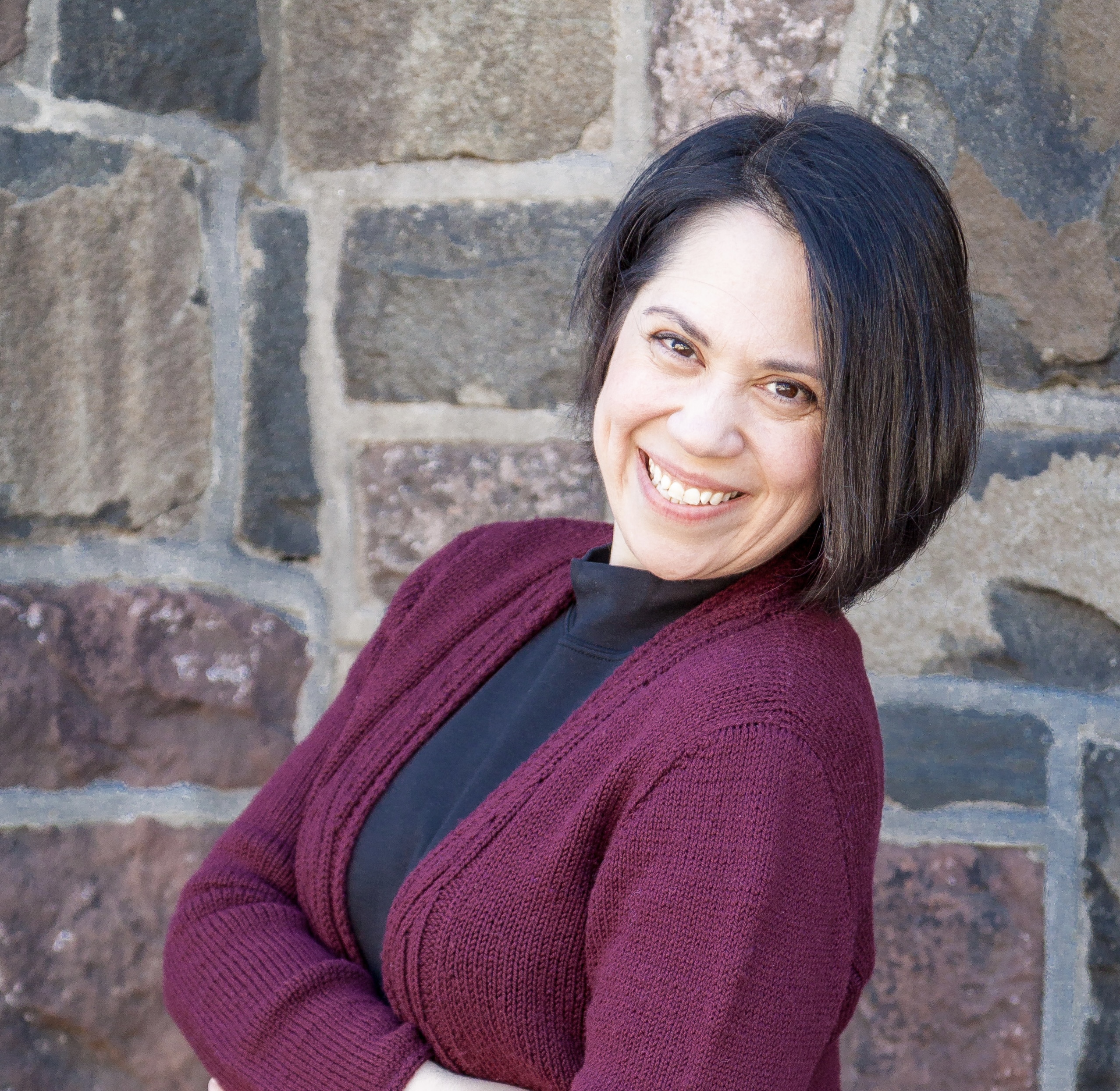
I was invited to do a guest post for the URJ’s 10 Minutes of Torah liturgy series. You can read my post here:
Psalm 116 Guest Post
Enjoy!
7 Aug
My Guest Post
1 Aug
Tisha B’Av
Hello blog readers. I know it’s been an age…
I did a sermon this past Friday evening on the subject of Tisha B’Av. It’s the summer, so attendance at worship has been light. We’ve seen about 25-30 on average at services. This Friday, however, was the start of the London Olympics, with opening ceremonies due to commence at the same time as services. We had 10 in attendance. So, even though Tisha B’Av has come and gone for this year, I thought I’d share my sermon with you. Enjoy.
(Sermon originally delivered at Temple Beth Torah 7/27/2012)
This weekend, Jews all over the world will observe the holiday of Tisha B’av. Tisha B’Av, which literally means the 9th day of the month of Av, is a fast day, and a national day of Jewish mourning. Both the First and Second Temples in Jerusalem were destroyed on the 9th of Av – 655 years apart. The holiday primarily recalls those terrible events, but our tradition also teaches that many of the worst tragedies in Jewish history, both ancient and more modern took place on that day. According to the Mishnah, the twelve spies sent by Moses to seek out the land of Canaan gave their fearful report on Tisha B’Av during Biblical times, The Romans crushed Bar Kochba’s revolt, destroyed the city of Betar and killed over 100,000 Jews on Tisha B’Av in the year 132. History also reveals that the first crusade began on August 15, 1096 – Tisha B’Av, Jews were expelled from England on July 25, 1290 – Tisha B’av, Jews were expelled from Spain on July 31, 1492 – Tisha B’av. World War I broke out on August 1, 1914 – Tisha B’Av and on the eve of Tisha B’Av in 1942 the mass deportation began of Jews from the Warsaw Ghetto to Treblinka began.
By Victorgrigas (Own work) [CC-BY-SA-3.0 via Wikimedia Commons]
Because the main focus of the holiday has been on the destruction of the Temples, its observance has fallen out of favor among liberal Jews – both Reform and to some degree, Conservative. Ismar Schorsch, former chancellor of the Conservative Jewish Theological Seminary said that Tisha B’Av has no appeal to the modern Jew who “no longer prays for the restoration of the sacrificial cult in Jerusalem.” He felt that the day’s modern meaning came from looking at the more recent national disasters that we also mark on that day.
We learn from the Talmud (Tractate Yoma) that the reason that the second Temple was destroyed was “Sinat Chinam” – baseless hatred. And baseless hatred is also behind many of the other tragedies that we mark on this day. It seems to me that perhaps the most meaningful way for liberal Jews to think about this holiday is through the lens of the damage caused by humanity’s tendency towards acts of baseless hatred. We see Sinat Chinam in acts of terror such as the tragic ones that we all heard about last week in Bulgaria and in Aurora, but we also see it on a less violent and less obvious scale in our day to day lives.
Earlier this week, I was listening to the podcast, “Freakonomics,” and the host was talking about how our political affiliations can be almost tribal (about 33:50 into the episode), that we often side with a political party, ascribing to their point of view without even fully researching or understanding everything that we say that we agree with. Political affiliation as tribal? A fascinating idea.
How do tribal affiliations make us behave? I think there are two primary feelings that come out of being a part of a tribe – pride and fear. I often get emails from congregants with lists or videos that talk about the great accomplishments of Jews over the centuries. The things that we, as a people, have managed to do that others have not. These are examples of our tribal pride and, to be honest, they always make me a little uncomfortable. A history of Jews in science, sports, or music makes us proud. A similar history that talked about the genetic or cultural advantages of being Christian, African American, or heaven forbid, white, would make us very wary indeed!
Tribal affiliations also make us feel fear and anxiety. We worry about “the other, “and about our persecution. As Jews we fear anti-semitism. As a liberal, I hear about “the war against women,” and countless other things we have to fear from the right. Conservatives too seem to have a great deal to fear from the other side of the aisle – their rights and liberties will be taken away, government will rule their lives, they will be taxed into poverty.
Both our fear and our pride make us want to close our minds and our ears to the other. Have you ever watched a “news” or talk show where political pundits are supposed to be “debating” an issue? Almost invariably they talk over one another to such an extent that the listener can not absorb any piece of the argument from either side. It’s better that way anyway, if we don’t agree with it, we probably don’t want to hear it. This sample is a little dated, but I think it illustrates my point perfectly.
I would not ordinarily think of myself as the kind of person who would not want to hear an argument that I don’t agree with. I believe that I am open minded, that I like to hear all sides of an issue before deciding how I feel about it. To some extent that is true. I do usually research an issue before I formulate an opinion (though I will admit that some of that research will be done on websites that agree with my political affiliations.) I do try to read both sides of the story, though. Once I have decided my stance, it is hard for me to not only revisit the issue, but even frankly, to listen to the other side.
I have this friend on Facebook. We aren’t really friends. We’re colleagues – but Facebook makes no distinctions. We are polar opposites politically and he posts about politics ALL the time. And my blood pressure goes up with each and every posting. I’ve considered “unfriending” him. I’ve thought about blocking his posts. It is the mere fact that I have pondered these things that illustrates my point. It is hard for me to tolerate this person from another political tribe in my friendship circle. His arguments make me angry. And I am sure the reverse is true. Unfortunately for him, I think most of his “friends” are members of my political tribe.
Is it different face to face? Unfortunately, no. A political discussion between friends at a recent barbeque that I attended almost necessitated the calling of the police. One of the people refused to let the other even finish his side of the argument before talking, yelling, standing and towering over, and then almost physically assaulting. And over what? They disagreed politically? Really?
One of the most brilliant things about our American political system is its innate balance. A president has no real power without congress. Congress is elected by majorities in all of the states. The far left and far right are balanced (we hope) through this system. Real work can only happen when politicians put aside, as much as possible, their “tribal affiliations,” and work for the greater good, listening to what one another has to say and working for balance.
The watchword of our faith is Sh’ma – Listen. It’s a harder thing to do than most of us know, but it is the doorway to peace. When we really hear one another, we can disagree, but it’s harder to hate because you can see the humanity in the face of the other. This means being patient enough to hear their entire argument, and being willing in the end to say, “we agree to disagree.” Our tradition teaches that when we argue for the sake of heaven, the presence of G-d dwells between us.
The Temple was destroyed for Sinat Chinam – baseless hatred – a feeling that can only come about with eyes and ears closed. This year as we mark Tisha B’Av let us resolve to bring the essence of Judaism, that listening, into our relationships and our politics. We can mark Tisha B’Av best by donating to organizations that work tirelessly for peace, and dialogue, and by engaging in that work ourselves.
Shabbat shalom.
24 Feb
Making Holy Space and Space for the Holy
The following is the D’var Torah that I delivered Erev Shabbat:
“G-d spoke to Moses saying: “Tell the Israelite people to bring Me gifts; you shall accept gifts for Me from every person whose heart so moves him. And these are the gifts that you shall accept from them: gold, silver, and copper; blue, purple, and crimson yarns, fine linen, goats’ hair; tanned ram skins, dolphin skins, and acacia wood; oil for lighting, spices for the anointing oil and for the aromatic incense; lapis lazuli and other stones for setting, for the ephod and for the breast piece. And let them make Me a sanctuary that I may dwell among them.”
In this week’s Torah portion, Parshat Terumah, G-d lays forth a plan for creating a holy space – a portable sanctuary to be carried through the wilderness. G-d begins by asking for gifts. If the whole of creation belongs to G-d, why does G-d need gifts from us?
The answer is two-fold, and we can understand it by looking at the items requested. The first is that these are all objects of value and difficult to find. Blue, purple and crimson yarns are rare and expensive. The metals and skins would have been heavy to transport and hard to get. And… dolphin skins? In the desert? Really?
Finding, gathering, and then donating rare and valuable items is a hardship. G-d is asking people of means to give a real piece of themselves to the building of this Tabernacle. This is an investment, and when we finance a project, we often devote ourselves to it emotionally as well. This is the first layer.
You will notice that G-d doesn’t ask people to bring a gold lamp, a silver breast piece, or a blue mantle. The items that G-d requests are all raw materials out of which these can be fashioned. G-d then spends the rest of the parshah describing what the artists should create. This brings us to the next layer of G-d’s request – the emotional and artistic investment. Those who have been blessed with artistic skill will now give of themselves to fashion this house of G-d out of the raw materials brought by those of means. The people will literally “make” a sanctuary for G-d – devoting their time, energy, and creativity to the project. G-d said, “Make me a sanctuary that I may dwell there.” It is the act of making that allows God to live among the people.
The Hebrew word here “asu” means both make and do. It is the same word used in the prayer, Oseh Shalom. We must Do in order to Make. Peace isn’t something that simply descends upon the people from on high. We ask G-d to be active in making peace and then we do the same. In the building of the sanctuary we are involved participants in the creation of holy space which G-d then echoes by dwelling there.
This brings us to the next important question that this passage raises. If G-d is indeed everywhere, why does G-d need a dwelling place? Doesn’t G-d live among us wherever we are? I view most of the Torah as telling the story of the psychological and spiritual development of a people. The exodus story for me represents the adolescence of the Jewish nation. Having escaped from slavery, as a mixed multitude, we were not yet unified and had a very childlike understanding of G-d. We needed a G-d that we could see, so we built an idol, the golden calf. From this, G-d saw that we needed to be brought into a mature faith gradually. G-d gave us many signs and wonders, but as a people we were used to visual reminders of G-d’s presence. If we could not actually see God, at least we needed a concrete place to go to find G-d. We were not ready to find G-d in the beauty and wonder of nature because we had a tendency to rush into idolatry. At this stage of our spiritual development, we had to have a House for G-d. By having us build the dwelling (as we had actually made the idol), G-d allowed us to invest ourselves in its art and its design, but this time it was toward a place, a space for worship – as opposed to an object of worship. While we built the external structure for worship, we would also be building a spiritual connection to that place – making room for G-d both within our own souls and beyond.
Abraham Joshua Heschel, in his famous book, “The Sabbath,” talked about the fact that one of the problems with Temples and Tabernacles is that they can always be (and ultimately have always been) destroyed. The one thing that no person or ruler can take away from us is time. Shabbat, Heschel writes, is a permanent sanctuary in time. When observant people talk about Shabbat, they often talk about “making Shabbat.” Although Shabbat comes every week whether we observe it or not, it cannot be a sanctuary for us unless we “make” it so.
Over the past several weeks, I have had many conversations with students about what it means to observe Shabbat. Traditionally speaking there are 39 categories of “work” that you cannot do. These categories are, interestingly enough, derived from the activities necessary for building the portable sanctuary, the mishkan, in the wilderness. So, in order to build a sanctuary in time, we must stop building a sanctuary in space. Another way to look at the Shabbat commandment is that G-d did the work of creation of the world in seven days and then rested. Echoing G-d, we too, must stop creating in the world in order to create a sacred space in time.
What does that mean for us today, as Reform Jews? How do we create sacred places during the week and sacred spaces on Shabbat? Heschel wrote, “The meaning of Shabbat is to celebrate time rather than space. Six days a week we live under the tyranny of the things in space; on Shabbat we try to become attuned to the holiness of time. It is a day on which we are called upon to share in what is eternal in time, to turn from the results of Creation to the mystery of Creation, from the world of Creation to the creation of the world.” How will we achieve that goal?
In Parshat Terumah, G-d asks us to bring gifts, raw materials, to create a dwelling place for G-d. In bringing their financial and artistic gifts to the endeavor, the Jewish people bring their souls to the creation of a sanctuary. Having worked toward creating that sacred space, we are asked to mimic G-d’s actions and rest from the work of creation. We are asked to make Shabbat a complete and joyful day, a day different from our six days of work.
So Parshat Terumah offers us the chance to reflect upon what we will create this week and to consider how to make that creation holy. And in having created, we also turn our thoughts to making our rest separate and holy, too, a true “sanctuary in time.”
So my readers here is my question to you:
How do we, as modern Reform Jews, create that sanctuary?
What do you do on Shabbat to make it holy? What do you refrain from doing?
20 Jan
It’s a Knitzvah
Our Hebrew high school offers core classes and elective classes in small units. When we were approaching the new unit, the educator asked me if I would be willing to teach a knitting class. I agreed to do it on two conditions: that we were able to somehow create a class that also involved serious Jewish learning, and that there was enough interest to make it worthwhile. As it turned out, eleven students signed up for the course (including four boys!), and I was having no trouble coming up with good topics for learning that related to both knitting and Judaism.
We called the class, “Knitzvah.” The course has three primary goals: To learn the craft of knitting; to complete a blanket (made in squares) to donate to the charity of their choice; and to study Jewish texts that tangentially or directly relate to the craft. All of this in a 30 minute time-slot!
For our first class, the students selected the color yarn they wanted to use and learned about knitting charities. The chose, as a class, “Project Linus” to be the beneficiary of their knitting.
By the second class, we had our supplies in hand, and I spent the entire class going around the room teaching the basic stitches. I handed out a text study about the 39 categories of labor that went into producing the Tabernacle. I hoped that the students would discuss how much love, skill, and craftsmanship went into the building of a holy place. The reality was however, that since this was their first day with yarn and needles and the class was only thirty minutes, the text study was largely ignored. This class was pretty much a skill-building class alone.
I worried that that would be the norm, and that the class would fail as a “Jewish” course even if it succeeded as a knitting course. In planning for the third class, I realized that I needn’t have worried. The topic was keva and kavannah.
Prayer takes two forms – keva, the concrete, written text of the prayers, and kavannah, the personal intention that each individual brings to the text. When we learn the Hebrew text, the keva, and know it well, we have an opportunity to get lost in the kavannah. Hebrew prayer can work as a mantra, and it actually helps if you aren’t fluent in Hebrew! If I am praying the Yotzeir prayer, for example, I know that this is a prayer about creation, nature, and light. As my mouth recites the Hebrew words, my mind and heart can meditate on their meaning. If the prayer was in English, I would be far more wedded to the actual written words of the text.
After we discussed the concept in class, we talked about it how it applies to music. I sang the chorus of Jeff Klepper’s “Shalom Rav” twice. The first time I sang it, I tapped out the rhythm on my thigh and gave a clean rendition of the notes on the page with no inflection or prayerfulness. Then I sang it again, praying for peace as a I sang the words. We talked about the importance of prayerfulness. We discussed the difference between the notes on the page and a musical interpretation – kavannah.
After all of that, I brought the subject to knitting. I explained that we were beginning our knitting with a swatch just for learning, but that we would discard these swatches. These are about learning the keva of knitting. Once we have all mastered the stitch, we will begin work on our blanket squares. In making these, we can add the kavannah. These blankets are for sick children. We will knit our love, caring, and our prayers for healing into the stitches. Having mastered the keva, as they have with their prayers, they will have the attention left over for kavannah.
My sister had a baby recently. Her first child had been born very sick and this new pregnancy was frightening for our family as we all worried for my sister’s health and that of this new baby. I began a baby blanket almost as soon as she told me that she was pregnant. As that tiny baby developed, I knit his blanket, adding love, hopes, and prayers to every stitch. Her older daughter, now a beautiful five year old girl, still sleeps with the blanket that I knit for her. I dreamed of seeing this new, hopefully healthy baby, wrapped in the thousands of stitches that I knit for him.
Charlie was born in October. He is a beautiful, healthy, happy baby. The favorite plaything of his big sister, and loves to nap on all of us. His blanket came out perfectly. I hope he can feel all the love within the stitches.

27 Dec
The Eighth Candle
![]()
Today’s synonym for light is (last, but absolutely not least) inspiration / spirituality.
There was a machloket (a disagreement) between the houses of Hillel and Shammai as to what order the candles on the Chanukiah should be lit on Chanukah. The house of Shammai stated that the holiday should begin with all eight candles lit, decreasing by one candle each night until there was one flame on the last night of the holiday. This was because, according to Shammai, one begins with the “days remaining;” – the “maximum potential” of the commandment. Or, another interpretation is that it represented the waning power of the Greeks over the Jewish people.
The house of Hillel argued that we should light the candles the opposite way, beginning with one flame and working our way up to eight (nine if you count the shamash). Hillel believed that you begin with the “realized potential” of the mitzvah. As the Maccabees purified the Temple during those eight days, the presence of G-d in the Holy Temple increased. Or, you can also see it as representing the Maccabees. What began as a small band of rebels grew to a large group. As we well know, Hillel won the argument, and as a result, the days of Chanukah grow increasingly warm and beautiful with each passing night.
The eighth night of Chanukah often strikes me as a particularly lovely, inspiring, and spiritual time. On the first night of Chanukah, the two lonely candles were barely able to pierce the darkness of the room in which they burned. But on the eighth night, the room dances in the reflections of the flames. As the warmth and light has grown, so too can our spiritual connection as we move past the holiday into the cold, but steadily lightening days of winter.
May you share your winter in the warming presence of loved ones and friends and may your secular new year be a sweet one.
Happy Chanukah!
26 Dec
The Sixth and Seventh Candles
I got caught up with family celebrating Chanukah this weekend, and so am posting candles six and seven together this evening. Watching my nephew squeal over the “wheel” toys we bought him was well worth it!!
![]()
Synonym number six for light was “beacon.” A beacon is a light signaling safety or home that can be seen from some distance away. Synagogues try to be beacons for the Jews in our neighborhood by welcoming newcomers with open arms. We also try to be beacons to our community by feeding the hungry, housing the homeless, hosting Alcoholics Anonymous, teaching our children, and more. The synagogue, of course, does not do these mitzvot alone. Our best actions come from the creative minds of our members. What will you do in the coming year to be a beacon of light and of Jewish values to your community?
![]()
This question leads us beautifully into synonym number seven – ignite. This word has two definitions. 1. To catch fire or cause to catch fire and 2. To arouse an emotion. This synonym for light is about inspiring others toward holy acts. When I discuss their mitzvah projects with my students I often talk about how they can show their friends and neighbors how simple and wonderful it is to do a mitzvah. That through doing things they love, they can add holiness to the world. Have you ever seen a mitzvah that inspired you to do one too? Can we share some examples in the comments?
Here are come examples that I found particularly inspiring.
1. I had a student who did a bike-a-thon to raise money for the Heifer Foundation. He and his friends got sponsors to join him. After his Bar Mitzvah, he did the bike-a-thon every year until he graduated High School.
2. Another student of mine made hand-made bracelets and sold them during snack time at Hebrew school to raise money for Pennies for Peace.
(Okay, I could go on about my students all day. Here are two that are NOT from my students)
1. The story of RandomKid. In 2005, two teenagers “reached out to rally U.S. youth to aid survivors of Hurricane Katrina, which devastated the Gulf Coast. Their effort ended up ranking the giving power of U.S. school children with the top FIVE U.S. corporate donors, coming in at over $10 million.” They then founded the company, RandomKid which helps kids join together in major efforts to make the world a better place.
2. Chana and her knitted hats for Israeli soldiers(if you are interested in knitting hats for Israeli soldiers too, you can find her website with instructions here.) Be sure and tell me that you did!
![]()
24 Dec
The Fifth Candle
Today’s synonyms for light are clear / lucent. It has become a common practice today for people to greet one another throughout the month of December by saying, “Happy Holidays.” It is wonderful that we live in a culture that is so inclusive and understanding of the multitude of faith traditions that live in our world. Unfortunately, we have become such a faith melting pot, that we have begun to see our symbols meld, and in towns across the United States we see the “holiday tree” adorning the town square. I think as part of exploring the theme of light, it is important to bring some clarity into what the tree is meant to represent rather than viewing it as merely a symbol of the season. Symbols are an important enrichment to the holiday and overly neutralizing them can dilute the character that makes a holiday enriching to those who celebrate it.
Here are what the Christmas symbols historically represent:
The evergreen tree – the rebirth of Jesus after the crucifixion.
The wood of the tree – the cross
The 5-pointed star – the star which the wise men followed to find the baby Jesus
The tinsel – angel’s’ hair
The color red – the blood of Jesus
Christmas presents – the gifts brought by the wise men to the baby Jesus
(special thanks to Rabbi Beal for sharing this information in an article)
Here are what the Chanukah symbols historically represent:
The Chanukiah (or Chanukah menorah) – the miracle of the eight days of burning oil when the ner tamid (eternal flame) was lit to rededicate the Temple
Potato Latkes or Sufganiot (jelly donuts) – foods cooked in oil to remind us of the miracle
Dreidel – a top containing the hebrew letters nun, gimel, hay, and shin (or in Israel pey) representing the Hebrew words neis gadol hayah sham (or in Israel po) – A Great Miracle Happened There (or Here).
Happy Chanukah (or if you celebrate it, Merry Christmas)